
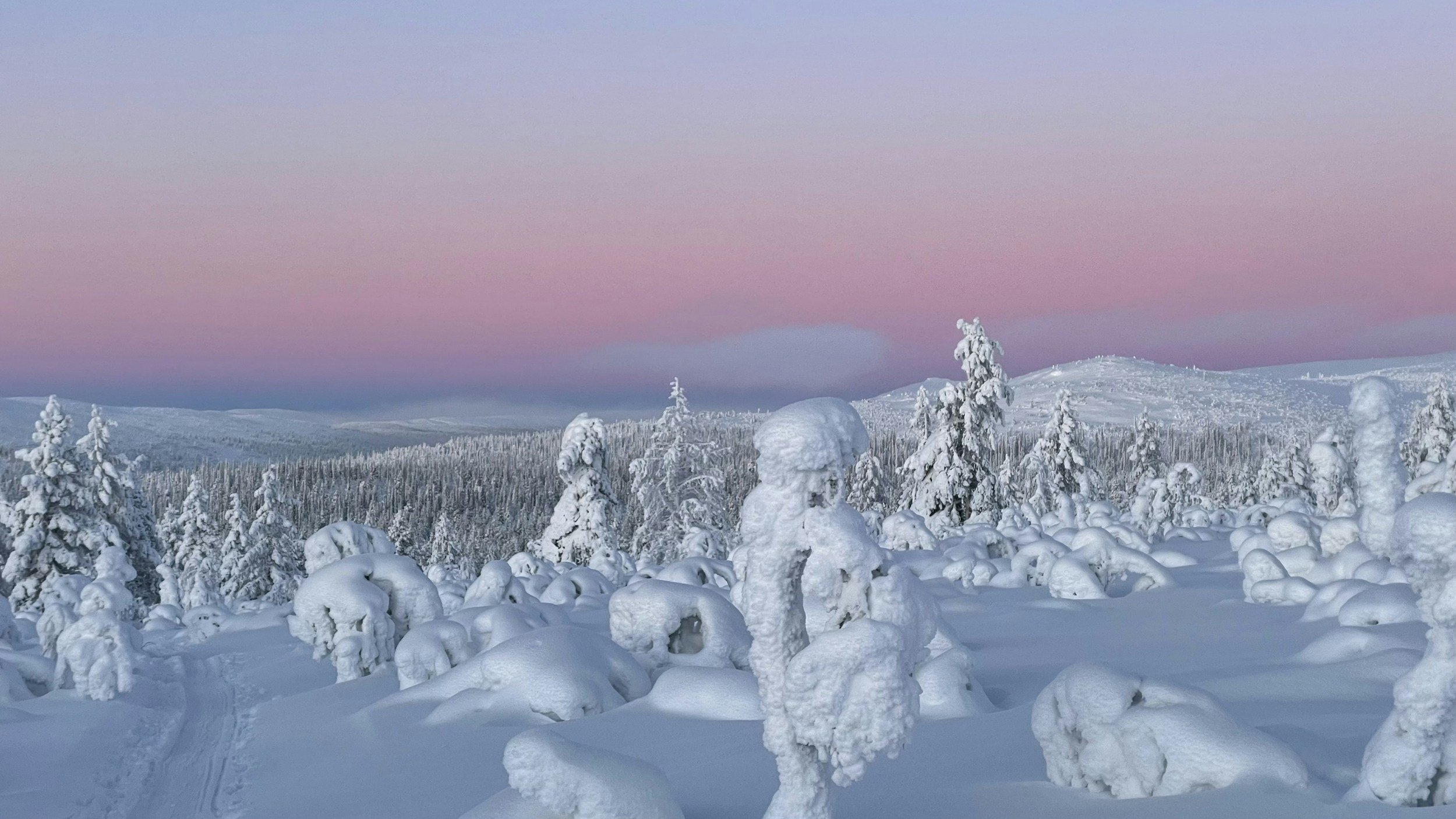
A winter trip to Finnish Lapland is rather different from an ordinary winter holiday. Temperatures can fall well below freezing, snow covers the forests and frozen lakes, and much of your time will be spent outdoors, whether travelling by snowmobile, exploring on foot or waiting beneath the Northern Lights.
The answer isn't to pack your entire winter wardrobe. It's to pack intelligently, with layers that work together.
You'll spend time outdoors in Arctic conditions, but you'll also return to warm wilderness lodges, cosy restaurants and traditional Finnish saunas. The aim is to stay warm and comfortable outside without bringing unnecessary bulky clothing.
Here are the things we'd make room for in your suitcase.
Start with layers
Rather than relying on one very warm coat, think in three layers.
A thermal base layer sits next to your skin, followed by something insulating, such as a fleece, merino sweater or lightweight down jacket. Your outer layer provides protection from wind and snow.
This gives you flexibility throughout the day. You can adjust your layers when moving between activities, travelling in a warm vehicle or spending longer periods outside watching the Northern Lights.
Merino wool is particularly good for Lapland. It's warm without being too bulky, manages moisture well and can be worn several times without needing to be washed, making it ideal for travelling light.
We'd suggest packing:
2–3 thermal or merino base-layer tops
2 pairs of thermal leggings
1–2 insulating mid-layers
1 warm fleece or merino sweater
1 insulated jacket for everyday wear
Comfortable trousers for indoors and evenings
One or two outfits for dinner
Your outer layer matters most
If there's one thing worth understanding before travelling to Lapland, it's that you may not need to bring your own specialist snow suit.
Many wilderness lodges and activity providers supply insulated thermal overalls, winter boots and mittens for organised excursions. These are designed for Arctic conditions and can be worn over your own base and mid-layers.
If you're exploring independently, however, a good insulated winter jacket and windproof trousers are worth having. Look for clothing that offers proper protection against wind and snow, with enough room to comfortably accommodate your layers underneath.
A waterproof and windproof outer layer is particularly useful when walking or snowshoeing, while a warm insulated jacket is invaluable when spending time outside without much movement.
Before buying expensive specialist equipment, check exactly what your accommodation and activity providers include. There's little point filling your suitcase with bulky winter clothing if it's already provided.
Footwear: don't compromise
This is probably one of the most important pieces of practical advice we can give.
Ordinary trainers, fashion boots and lightweight walking shoes won't be suitable for exploring snowy landscapes in Arctic temperatures.
If you're bringing your own footwear, look for insulated winter boots with a waterproof construction, good grip and enough room to accommodate thick wool socks. Ideally, they should be suitable for temperatures of -20°C or lower.
If your itinerary includes snowmobiling, husky sledding or other organised excursions, specialist winter boots are often provided by the operator.
We'd also bring a second pair of comfortable shoes for your lodge, restaurants and evenings. There's something particularly satisfying about changing into something comfortable after a day spent exploring in the snow.
Pack the right socks
Your socks are more important than they sound.
Merino or wool socks are our preference, particularly for days spent outside. They help regulate temperature and remain insulating even if they become slightly damp.
Pack around four or five pairs for a five-night trip, with an extra pair or two if you have room.
Avoid wearing too many layers of socks inside your boots. If your footwear becomes too tight, it can restrict circulation and leave your feet feeling colder.
Don't forget your swimwear
This one catches people out.
Finland has a wonderful sauna culture, and many wilderness lodges offer traditional saunas as part of the experience.
After a day spent exploring frozen forests or travelling across snowy landscapes, warming up in a sauna is one of the great pleasures of a Lapland winter escape.
Depending on your accommodation, you may also have access to an outdoor hot tub or the opportunity to experience ice swimming.
A swimsuit deserves a permanent place in your suitcase, along with a small bag for carrying wet swimwear afterwards.
A hat, snood and gloves are essential
When temperatures drop well below freezing, protecting your hands, feet and face becomes particularly important.
A warm hat that covers your ears is essential, while insulated mittens are generally warmer than traditional gloves. A pair of thin liner gloves underneath is useful when handling your phone or camera.
A balaclava or neck warmer is another excellent addition, particularly for snowmobiling and other activities where you're exposed to the wind.
We'd recommend packing:
A warm wool or thermal hat
Insulated winter gloves
Thin liner gloves
A balaclava or neck warmer
Hand and toe warmers
Sunglasses are also worth bringing. Bright winter sunshine reflecting off the snow can be surprisingly intense, even when temperatures are extremely low.
Your day bag should be practical
For excursions, you'll want a small backpack rather than carrying everything in your suitcase.
Ideally, choose one that's comfortable to wear over your winter clothing and has enough room for a few additional layers and personal essentials.
Inside, keep:
A spare pair of gloves
Extra socks
Hat and neck warmer
Water bottle
Sunglasses
Lip balm and moisturiser
Camera or phone
Portable charger
Small personal essentials
A waterproof pouch is useful for protecting your phone, camera and other electronics from snow and moisture.
If you're taking a camera to photograph the Northern Lights, remember to bring spare batteries. Cold temperatures can drain them surprisingly quickly, so keep spares in an inside jacket pocket close to your body.
Lapland is cold. Embrace it.
One of the easiest mistakes is packing for the Lapland you hope to photograph rather than the Lapland you're actually going to experience.
There may be beautiful clear skies, stillness and the Northern Lights overhead. There may also be temperatures of -25°C, biting winds and long periods spent outside waiting for the aurora to appear.
The trick is not to let either dictate your experience.
Good thermal layers, warm accessories and suitable footwear mean you can enjoy everything the Arctic has to offer, whether that's exploring frozen lakes, following huskies through the forest or simply stepping outside your lodge to take in the stillness of the landscape.
And there is a silver lining: some of Lapland's most memorable moments happen in the cold.
Packing List
2–3 thermal or merino base layers
2 pairs of thermal leggings
1–2 fleece or insulating mid-layers
1 warm wool sweater
1 insulated everyday jacket
2–3 pairs of comfortable trousers
Comfortable indoor clothing
Underwear
Merino or wool socks
Warm hat
Insulated mittens
Thin liner gloves
Balaclava or neck warmer
Footwear
Insulated, waterproof winter boots (if not provided)
Comfortable second pair of shoes for evenings
Spare wool socks
For the sauna
Swimsuit
Small waterproof bag for wet swimwear
Flip-flops or sandals
For your day bag
Reusable water bottle
Sunglasses
Lip balm and moisturiser
Small backpack
Sunscreen
Portable charger
Hand and toe warmers
Camera and spare batteries
Waterproof phone or camera pouch
And finally...
Pack for layers, not bulk.
You don't need a huge suitcase full of heavy winter clothing. A good selection of thermal base layers, insulating mid-layers and warm accessories will take you a surprisingly long way. Check what your lodge and activity providers supply before investing in specialist Arctic equipment.
Finnish Lapland rewards being prepared. Because once you're warm and comfortable, you can forget about the temperature and concentrate on what's outside the window.
